
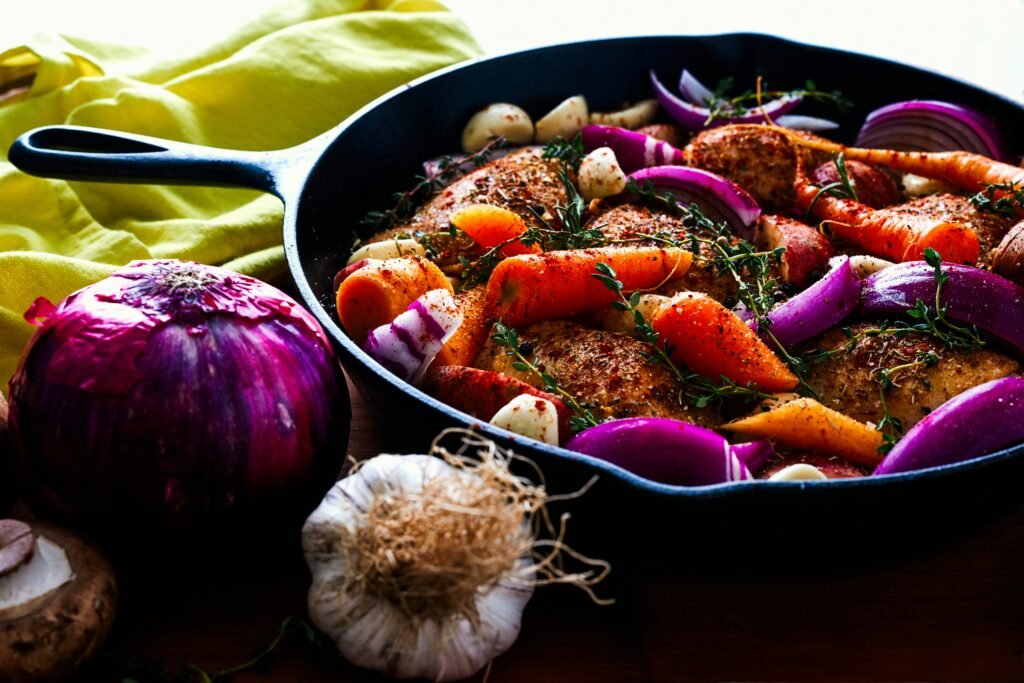
Elevating Flavor and Health.
“A cast iron skillet is more than a pan — it’s a living, breathing piece of the kitchen’s soul,” says renowned chef Thomas Keller. “It holds the memory of every meal it’s ever cooked — the perfect sear on a steak, the golden crust of cornbread, the gentle sizzle of onions meeting heat. Its weight grounds you, its surface teaches patience, and its warmth rewards care. Cast iron doesn’t just cook food; it creates stories that last a lifetime.”
The Advantages of Cast Iron Cookware
Cast iron cookware has long been a favorite of chefs and home cooks alike, and for good reason. One of the primary advantages of using cast iron pans is their remarkable durability. Unlike many modern non-stick pans that may warp or scratch easily, cast iron cookware is built to last. With proper care, which includes regular seasoning and careful cleaning, these pans can be passed down through generations, making them a sustainable choice compared to disposable alternatives.
Another notable benefit of cast iron cookware is its exceptional heat retention. Cast iron has a unique ability to retain heat, which makes it ideal for cooking methods that require steady, even temperatures such as searing and frying. This characteristic not only ensures uniform cooking but also allows for the development of rich, deep flavors in foods. As heat is maintained over time, cast iron cookware facilitates a more controlled cooking environment, enabling chefs to create exquisite dishes.
Moreover, cast iron pans boast natural non-stick properties that improve with use. Unlike synthetic non-stick surfaces that can degrade over time, a well-seasoned cast iron pan develops a patina that enhances its non-stick capabilities. This characteristic reduces the need for excessive oils or fats, resulting in healthier cooking options. Additionally, cooking with cast iron can provide nutritional benefits; research indicates that small amounts of iron may leach into food, particularly when cooking acidic dishes. This natural infusion can be beneficial for individuals with specific dietary needs, such as those who require additional iron intake.
In addition to their durability and heat retention, cast iron cookware promotes both health and sustainability in culinary practices. Embracing this traditional cooking method allows for a heightened cooking experience while contributing positively to broader environmental efforts.
How Cast Iron Enhances Flavor
Cooking with cast iron is not merely a method; it is an art form that elevates the flavor of food through a combination of science and tradition. One of the key factors contributing to the enhanced flavor in cast iron cooking is the Maillard reaction, a complex chemical reaction that occurs when proteins and sugars in food are exposed to high heat. Cast iron pans reach high temperatures and maintain them effectively, allowing for superior searing, crisping, and browning of ingredients. This reaction is responsible for the rich, complex flavors that signature dishes exhibit, forming a delectable crust that contrasts beautifully with the tender interior.
As the seasoning on a cast iron pan develops over time through repeated use and proper care, it contributes to a unique flavor profile that is unmatched by other cookware. Each cooking experience leaves behind traces of flavors that combine harmoniously, thus imparting an authentic depth to various dishes. This flavor layering is a cherished process passed down through generations, embodying cultural traditions and the nostalgia of home-cooked meals.
These cultural ties to cast iron cookware are deeply ingrained in many culinary practices worldwide. Families have used their beloved cast iron skillets for decades, passing down recipes that intrinsically link the pan with cherished memories of meals shared together. Whether it is cornbread, fried chicken, or a hearty stew, the flavors tryst in the beautifully seasoned iron, creating dishes that tell a story. Consequently, the relationship between cast iron and flavor enhancement illustrates how cooking practices can preserve tradition while simultaneously improving the taste and quality of food.
Sustainable Cooking Practices with Cast Iron
Cast iron cookware has gained prominence not only for its durability and heat retention but also for its alignment with sustainable cooking practices. By opting for cast iron, individuals can significantly reduce reliance on disposable or single-use cookware, which contributes to environmental waste. Unlike many modern cookware options, cast iron is designed to last a lifetime, fostering a mindset of investment in quality rather than convenience. This longevity not only minimizes waste but also enhances the culinary experience.
Furthermore, preparing meals in cast iron promotes a nutrient-dense cooking approach. The unique properties of cast iron allow it to retain heat effectively, which is essential for cooking food evenly and efficiently. When using cast iron, the emphasis is on cooking with whole foods such as vegetables, grains, and legumes, rather than processed items that often come in single-use packaging. This shift not only enhances flavor but also boosts the nutritional value of meals, aligning with a more health-conscious lifestyle.
Seasonal ingredients play a vital role in sustainable cooking, and cast iron cookware serves as an excellent tool for showcasing these fresh produce selections. By cooking with what is locally available and in season, individuals can reduce their carbon footprint and support local farmers. Additionally, cast iron pans are versatile and can be used for a variety of cooking methods—from braising and baking to frying and sautéing—encouraging culinary experimentation with diverse ingredients.
The commitment to cooking sustainably extends beyond just food choices; it’s also about adopting practices that respect the environment. When heat is efficiently retained in cast iron, it means reduced energy usage during cooking. By integrating cast iron cookware into daily routines, consumers are embracing a holistic approach to sustain a healthy lifestyle while making environmentally responsible choices.
Caring for Your Cast Iron for Longevity
To ensure your cast iron cookware remains in excellent condition, proper care is essential. The first step in maintaining your cast iron involves effective cleaning. After each use, it is advisable to clean the cookware while it is still warm, using hot water and a non-abrasive sponge. For stubborn food residues, a gentle scrub with coarse salt can provide a natural abrasive without damaging the surface. Avoid using soap, as it can strip the natural oils that protect the cast iron.
Once your cookware is clean, drying it thoroughly is crucial to prevent rust. A quick way to do this is to place the cookware over low heat on the stove for a few minutes, allowing any residual moisture to evaporate. After drying, applying a thin layer of oil, such as vegetable or flaxseed oil, which functions as a natural seasoning agent, maintaining the cookware’s non-stick qualities and protecting it from moisture.
Seasoning is a vital component of cast iron care. Ideally, this process should be conducted regularly, particularly for newer or rustic pans that may not have a seasoned layer yet. To season your cookware effectively, apply a thin coat of oil and place it upside down in an oven preheated to 375°F (190°C) for about an hour. This helps create a durable, non-stick surface that enhances food flavor and health benefits.
Proper storage of cast iron pots and pans is also essential to their longevity. When stacking cast iron, place a paper towel between each piece to absorb moisture and prevent scratching. Additionally, dispelling the myth that cast iron must be “babied” is important; with straightforward maintenance, your cast iron cookware can withstand the test of time, often lasting for generations. By investing minimal effort into caring for your cast iron, you embrace a sustainable approach to cooking that enhances both flavor and health.